






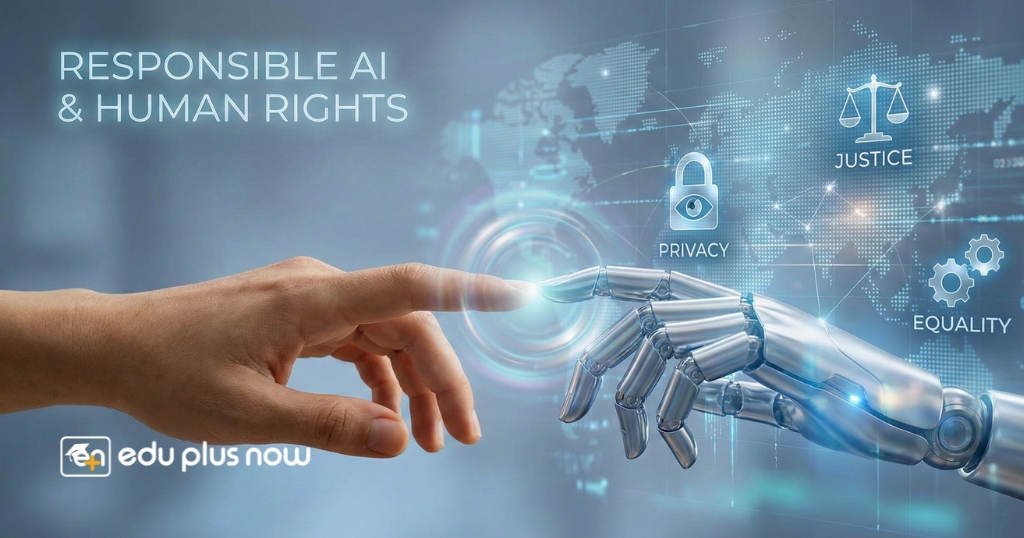
Why AI and Human Rights Go Hand in Hand
AI is no longer science fiction. It’s in our phones, cars, homes, and workplaces. From facial recognition to job applications, artificial intelligence impacts the way we live, work, and even think. But here’s the big question: Is AI helping humanity- or hurting it? Without the right ethical AI frameworks and AI safety practices, this powerful technology can be misused- leading to discrimination, privacy violations, and even threats to democratic rights. So, how do we ensure that AI respects, supports, and protects human rights?
Let’s explore the growing importance of Responsible AI guidelines and the global movement toward AI governance in 2026 and beyond.
Why Human Rights Matter in the Age of AI
AI systems don’t just crunch numbers- they make decisions. And when those decisions affect real human lives, the stakes couldn’t be higher.
Here’s how AI intersects with our most basic rights:
- Privacy: AI systems collect, process, and analyse massive amounts of personal data. Without controls, this data can be used without consent.
- Equality: Biased algorithms can lead to discrimination in hiring, lending, policing, and healthcare.
- Freedom of Expression: Content moderation bots may censor opinions, wrongly flagging them as harmful or misleading.
- Employment Rights: Automated systems in recruitment might unfairly filter out qualified candidates.
- Bias Reduction: When designed ethically, AI can reduce human bias- but only if it’s trained on fair and diverse datasets.
Bottom line? AI must be aligned with human values, not just programmed for efficiency.
The Risks of Unregulated AI
What happens when AI is left unchecked?
We’re already seeing the dark side of unregulated AI technologies:
Common Threats of Irresponsible AI:
- Algorithmic Bias: AI tools trained on biased data can reinforce racism, sexism, or socioeconomic inequality.
- Misinformation: AI-generated deepfakes and fake news spread faster than fact-checkers can respond.
- Data Misuse: Companies and governments can exploit personal data for profit or control.
- Discrimination: AI tools in hiring, policing, or credit scoring can make unfair decisions that harm real people.
- Privacy Violations: Surveillance tools powered by AI can track every move you make- online and offline.
Clearly, without strong AI governance and responsible AI practices, the technology can be more dangerous than helpful.
What Responsible AI Actually Means
So, what is Responsible AI, really? It’s not just about making AI “work better”- it’s about making AI work fairly, safely, and ethically.
Key Pillars of Responsible AI:
- Fairness: AI should treat everyone equally- regardless of race, gender, or background.
- Transparency: People should understand how AI systems make decisions.
- Accountability: Developers and organizations must be responsible for the outcomes of their AI.
- Inclusiveness: AI must be designed to serve diverse communities and needs.
- Interpretability: Users should be able to question and understand AI decisions.
- Safety & Security: AI systems must be secure from misuse, hacking, or unintended harm.
In short, Responsible AI guidelines help build trust- and make sure AI supports humanity, not replaces it.
Global Efforts & Policies in AI Governance
Nations and organizations around the world are waking up to the need for ethical AI regulation.
Let’s break it down:
AI Regulations in India: India released Responsible AI for All, a strategy focused on fairness, transparency, and AI for social good. The aim is to balance innovation with data protection, inclusivity, and accountability.
EU AI Act: The European Union’s groundbreaking AI Act classifies AI risks and regulates high-risk systems- especially in healthcare, transport, and justice.
UNESCO AI Ethics Guidelines: In 2021, UNESCO introduced a global framework to guide AI development based on human rights and environmental sustainability.
Corporate Responsibility: Tech giants like Google, Microsoft, and IBM have launched internal ethical AI frameworks- but critics say self-regulation isn’t enough.
What’s clear is this: Laws, policies, and global cooperation are essential for AI to stay on the right track.
How AI Can Actually Protect Human Rights
AI isn’t all risk- it also holds incredible potential to defend human dignity, when used the right way.
Real-World Examples:
- Detecting Discrimination: AI tools are helping HR departments uncover and eliminate unconscious bias in hiring.
- Preventing Cyber-Harassment: Platforms like Instagram use AI to flag abusive messages before they’re sent.
- Enhancing Accessibility: AI-powered apps provide real-time captions for the deaf and blind, breaking communication barriers.
- Safer Digital Access: Cybersecurity AI detects fraud and protects users from identity theft.
- Improving Justice Systems: AI helps legal professionals analyze case history, predict legal outcomes, and support fairer rulings.
Used wisely, AI can become a guardian of human rights, not a threat to them.
The Role of Education & Awareness in Responsible AI
We can’t build a responsible future with irresponsible users.
Whether you’re a student, tech professional, policymaker, or business leader- AI literacy is non-negotiable in 2026 and beyond.
Why Education Matters:
- Students: Need to learn ethical coding and the societal impacts of AI.
- Professionals: Should stay updated on evolving AI safety practices and AI governance models.
- Corporates: Must train teams in bias detection, fairness auditing, and secure AI deployment.
- General Public: Everyone should know how their data is used and their rights in a digital society.
“At edu plus now, we train professionals across industries on Ethical & Responsible AI practices to build a future where AI protects people- not the other way around.”
With platforms like edu plus now, the next generation of AI experts will be equipped to design responsibly, deploy safely, and think ethically.
Final Thoughts: It’s Time to Hold AI Accountable
The future isn’t just about smarter machines- it’s about smarter choices.
AI should empower, not exploit. It should uplift, not undermine. And most importantly- it must protect, not violate, human rights.
By embracing Responsible AI, supporting ethical governance, and educating ourselves, we can ensure that technology is a force for good- not harm.
Let’s not wait until it’s too late.
Frequently Asked Questions (FAQs)
Q1: What is Responsible AI?
Responsible AI refers to designing, developing, and deploying AI systems in ways that are fair, transparent, accountable, inclusive, and secure- aligned with ethical and human rights standards.
Q2: How does AI affect human rights?
AI affects privacy, freedom of speech, equality, and employment. Without safeguards, it can lead to discrimination, surveillance, and data misuse.
Q3: What are India’s efforts in AI governance?
India’s AI Regulations focus on inclusive AI, fairness, and ethical innovation. Initiatives like Responsible AI for All and partnerships with NITI Aayog aim to make AI work for the public good.
Q4: Can AI be used to defend human rights?
Absolutely. When developed ethically, AI can detect discrimination, enhance accessibility, fight online abuse, and support justice systems.
Q5: Why is AI education important?
Understanding AI’s ethical impact is crucial for everyone. Whether you’re a developer or an end-user, AI awareness empowers you to make informed and responsible decisions.
Helpful Resources: